
There’s a moment in this conversation with Adrienne Clark, Director of Engineering Operations at Re:Build Fikst, that perfectly captures what engineering actually looks like in the real world, and it’s not what most people expect.
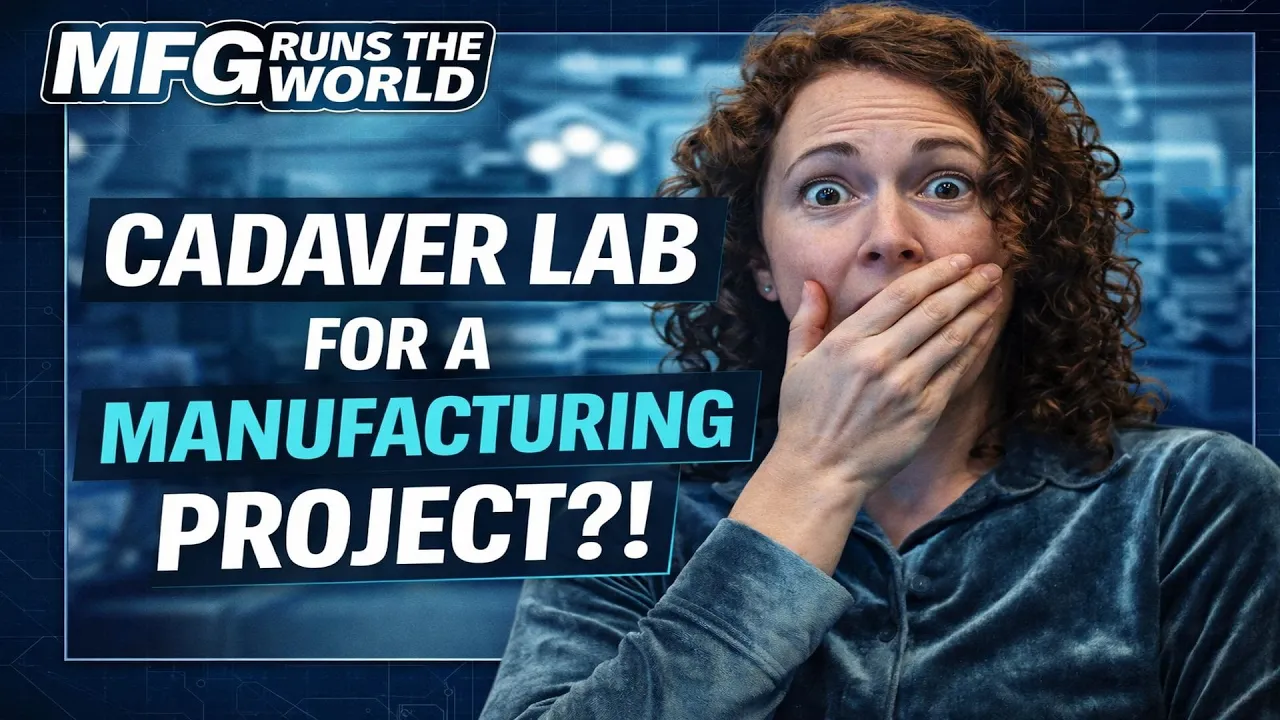
Adrienne and her team were invited by a surgeon to evaluate a new medical device, a cranial plate designed to repair skull fractures. They showed up thinking they were walking into a discussion. Maybe a quick overview. Maybe a few questions. Nothing too crazy.
Instead, they were handed protective gear and told, “We’re going in.”
Not into a conference room, but into a cadaver lab.
At one point, they were even handed a tool and asked if they wanted to make an incision to evaluate the prototype. They passed. But the moment stuck. It made one thing very clear. This isn’t theoretical work. It’s real, hands-on, and sometimes it puts you right in the middle of the problem itself.
Most Problems Don’t Start With a Solution
Adrienne’s role at Re:Build Fikst sits right at the intersection of product development, manufacturing engineering, and complex problem solving. And one thing becomes obvious quickly when you listen to her talk about the work. Most problems don’t come in clean.
There’s this idea that engineering is about applying known solutions to clearly defined problems. Clean inputs, clean outputs. In reality, it rarely works that way. Most problems show up half-formed. Clients know something isn’t working or that they need something new, but they don’t have the answer. Sometimes they don’t even know what the right question is yet.
The engineers don’t walk in with a solution either. What they do have is a way to move forward anyway. Inside the company, they call it navigating “the fog.” That’s a pretty accurate description. You’re working through something real, with real constraints, but the path forward isn’t obvious. In some cases, you’re not even sure a clean solution exists.
The Hidden Cost of Waiting for Clarity
When most companies run into that kind of uncertainty, they slow everything down. More meetings. More analysis. More alignment. Everyone wants to feel confident before making a move.
And to be fair, that feels like the responsible thing to do.
But there’s a tradeoff that doesn’t get talked about enough. You’re delaying learning. When you don’t know the answer upfront, the only way forward is to test your assumptions against reality. The longer you wait to do that, the longer you’re operating on guesses instead of feedback. Over time, that delay adds up. What feels like careful planning can quietly turn into a competitive disadvantage.
Adrienne sees this firsthand in engineering environments where speed and learning are directly tied to outcomes.
Why Prototyping Beats Planning
The advice that comes out of Adrienne’s experience is simple. Sketch the idea, then go make it. Not perfect. Not polished. Just real enough to test.
You can spend six or eight months thinking through every angle and still be wrong. Or you can build something rough in a day and immediately learn what works and what doesn’t. Once something exists in the real world, even if it’s made out of cardboard and duct tape, it starts giving you answers. It forces clarity in a way thinking alone never will.
That shift, from trying to think your way to certainty to building your way toward it, is where things start to move.
The Engineers Who Actually Thrive
Not everyone enjoys working like this. The engineers who thrive in environments like Re:Build Fikst aren’t just technically strong. They’re comfortable being uncomfortable. They don’t need everything fully defined before they start moving. They’re willing to make decisions with incomplete information and adjust as they go.
And maybe most importantly, they’re fine being wrong early.
They understand that being wrong quickly is far more valuable than being right too late. Instead of trying to eliminate uncertainty, they move through it. That’s what keeps progress going.
What This Means for Manufacturing Leaders
This isn’t just an engineering mindset. It shows up across entire companies. You see it in how decisions get made, how ideas move, and how long things sit in planning before anything actually happens.
A lot of organizations create friction here without realizing it. Ideas get stuck waiting for more validation. Teams hesitate because they don’t want to get it wrong. Everything starts to feel like it needs to be fully figured out before anyone takes action.
But in practice, that slows everything down.
The companies that move faster aren’t reckless. They’ve just figured out how to get to real-world feedback sooner. And that changes everything. It’s something companies like Re:Build Fikst have built into how they operate.
A Culture Built Around Doing
One thing that stands out about Adrienne’s team is how hands-on the environment is. Engineers aren’t sitting on the sidelines designing in isolation. They’re using the machines, building parts, handling materials, and seeing firsthand how their ideas come together.
That kind of exposure changes how you think.
When you understand how something is made, you design differently. You make better decisions. You avoid mistakes that come from assumptions. It creates a culture where people don’t just talk about solutions. They build them, test them, and improve them in real time.
Where AI Actually Fits
Adrienne also shares a grounded perspective on AI. It’s not being ignored, but it’s not being blindly trusted either. It’s used as a tool to move faster. It can help generate code, build visualizations, or speed up early-stage work.
But it’s a starting point, not a final answer.
In high-stakes environments like medical device manufacturing, everything still needs to be checked, validated, and owned by a human. AI helps you move faster, but it doesn’t replace judgment. It just gets you to the important decisions quicker.
The Real Takeaway
If there’s one thing to pull from this conversation with Adrienne Clark, it’s this. You don’t think your way to the right answer. You build your way there.
The best engineers don’t wait until everything is clear before they act. They start moving while things are still uncertain and use that movement to figure things out. They test, learn, and adjust.
And over time, that ability to create clarity through action becomes a real advantage.
Because in the end, it’s not about who has the best ideas.
It’s about who figures out what actually works first.